
From CAD to Cavity: How CNC Machining Delivers Unmatched Precision in Mold Making
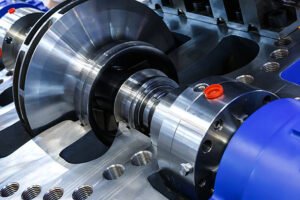
TL;DR: CNC machining transforms CAD designs into high-precision molds with micron-level accuracy, making it the gold standard for industries like automotive, aerospace, and medical devices. Its automated process eliminates human error, ensures repeatability, and handles complex geometries that traditional methods can’t match.
How CNC Machining Works in Mold Making
CNC (Computer Numerical Control) machining converts digital CAD models into physical molds through subtractive manufacturing. Here’s the workflow:
- CAD Design: Engineers create a 3D model with exact specifications
- CAM Programming: Software generates toolpaths and G-code instructions
- Machine Setup: Proper fixturing and tool selection
- Precision Cutting: CNC mills/lathes remove material with 0.005mm accuracy
- Finishing: Optional polishing or EDM for surface refinement
CNC Mold Making: Materials & Processes
| Process | Materials | Tolerance |
| 3-Axis Milling | Aluminum, P20 Steel | ±0.05mm |
| 5-Axis Milling | H13, S7 Tool Steel | ±0.025mm |
| CNC Turning | Brass, Copper Alloys | ±0.01mm |
| Wire EDM | Hardened Steels | ±0.005mm |
- Common Mold Materials: P20, H13, 420 Stainless, Aluminum 7075
- Surface Finishes: SPI A1 (Mirror) to D3 (Texture)
- Lead Time: 2-6 weeks depending on complexity
Why Choose CNC for Mold Making?
- Advantages:
- 50-75% faster than manual machining
- 99.9% repeatability between mold copies
- Handles undercuts & complex cooling channels
- Reduces scrap by 30-60%
- Ideal For:
- Injection molds
- Die casting dies
- Blow molds
- Composite tooling
Real-World Applications
Case Study: Tesla uses 5-axis CNC machining to produce aluminum die-casting molds for Model Y chassis components, achieving 0.1mm wall thickness consistency across 6,000+ parts/day.
- Medical: Dental implant molds with 5µm accuracy
- Consumer: LEGO brick molds with 0.002mm tolerance
- Aerospace: Turbine blade investment casting molds
FAQ
- Q: How small can CNC-machined mold details be?
A: Typically 0.1mm for standard tools, down to 0.02mm with micro-milling. - Q: Can CNC make multi-cavity molds?
A: Yes, with perfect cavity-to-cavity consistency. - Q: What’s the maximum mold size?
A: Up to 6m×3m×2m with gantry CNC machines.
Ready to Upgrade Your Mold Production?
Get an instant quote for your CNC mold project or schedule a consultation with our engineering team to discuss tolerances, materials, and DFM optimization.
CNC machining bridges the gap between digital design and physical perfection in mold making. As industries demand tighter tolerances and faster turnaround, this technology continues to redefine what’s possible in manufacturing.
Ready to Start Your Project?
Partner with Ruixin Mold for expert CNC machining services from China.
Visit www.dgruixinmold.com or contact us for a free quote today.