Lifter vs Slider in Molds: Key Differences Explained
In the complex world of injection mold design, two mechanisms often cause confusion among engineers and designers: lifters and sliders. Both serve critical functions in creating complex plastic parts with undercuts, but they operate differently and are suited for distinct applications. Understanding when to use a lifter versus a slider can mean the difference between an efficient production process and costly mold modifications.
This comprehensive guide will break down the fundamental differences between lifters and sliders, their working principles, advantages, limitations, and practical applications. Whether you’re a mold designer, manufacturing engineer, or simply curious about plastic part production, this article will provide valuable insights into these essential mold components.
Table of Contents
- 1. Understanding Mold Mechanisms Basics
- 2. What Are Lifters in Mold Design?
- 3. What Are Sliders in Mold Design?
- 4. Key Functional Differences
- 5. Movement Patterns Compared
- 6. Applications: When to Use Each
- 7. Design Considerations
- 8. Cost and Maintenance Factors
- 9. Common Challenges and Solutions
- 10. Future Trends in Mold Mechanisms
- FAQ Section
- Conclusion
1. Understanding Mold Mechanisms Basics
Before diving into the specifics of lifters and sliders, it’s essential to understand why these mechanisms exist in mold design. The primary purpose of both lifters and sliders is to create what are known as “undercuts” – features in a plastic part that prevent it from being ejected straight from the mold.
Undercuts can include internal threads, side holes, snap fits, or any geometry that isn’t parallel to the mold opening direction. Without mechanisms to handle these features, the molded part would either get stuck in the mold or be damaged during ejection.
Traditional two-plate molds open in a single direction, limiting the types of geometries that can be produced. This is where lifters and sliders come into play – they introduce additional movements that allow for more complex part designs while maintaining efficient production cycles.
The choice between a lifter and slider depends on several factors including the part geometry, production volume, material selection, and cost constraints. Both mechanisms have their place in modern mold design, and understanding their differences is crucial for optimal mold performance.
2. What Are Lifters in Mold Design?
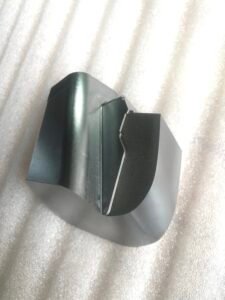
Lifters are angled pins or components that move at an angle relative to the mold’s opening direction. They typically operate through the action of the ejector system, converting vertical ejection motion into angled movement that clears undercuts.
The basic lifter mechanism consists of several key components: the lifter body (which contacts the part), the lifter angle (usually between 5-30 degrees), and the guiding system that ensures smooth movement. As the ejector plate moves upward during part ejection, the angled surface of the lifter causes it to move outward, releasing the undercut.
Lifters are particularly useful for internal undercuts or features that are relatively small in size. They’re commonly used for creating snap fits, internal ribs, or small side holes in plastic parts. Because they’re driven by the ejector system, lifters don’t require additional hydraulic or pneumatic actuators, making them mechanically simpler than sliders in many cases.
One significant advantage of lifters is their compact design. They can often be incorporated into the ejector plate area without requiring additional space in the mold base. This makes them ideal for smaller molds or applications where space is at a premium.
However, lifters do have limitations. The angle of movement is fixed by the lifter angle, which means they can’t accommodate very deep undercuts or complex geometries that require more sophisticated movements. They also typically can’t be used for external undercuts that require significant lateral movement.
3. What Are Sliders in Mold Design?
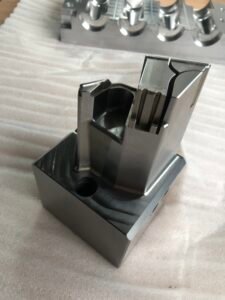
Sliders, also known as side actions or cam actions, are mold components that move perpendicular (or at another significant angle) to the mold’s opening direction. Unlike lifters, sliders are usually actuated by angled pins, hydraulic cylinders, or other external mechanisms rather than the ejector system.
The slider mechanism consists of the core that forms the undercut, the wear plate that guides its movement, and the actuation system (typically angled pins or hydraulic cylinders). Sliders move outward as the mold opens, clearing the undercut before part ejection begins.
Sliders are essential for creating external undercuts, side holes, or complex geometries that require significant lateral movement. They’re commonly used for parts with threads, large side openings, or multiple undercuts on different axes. The ability to incorporate multiple sliders in a single mold makes them versatile for complex part designs.
One key advantage of sliders is their ability to handle larger undercuts than lifters. They can also be timed independently of the ejection system, allowing for more complex mold sequences. Hydraulic sliders in particular offer precise control over movement timing and position.
However, sliders do add complexity to the mold design. They require additional space in the mold base, careful timing coordination, and often need external power sources. This makes them generally more expensive to implement and maintain than lifters.
4. Key Functional Differences
While both lifters and sliders address undercut challenges, they differ fundamentally in their operation and capabilities. Understanding these differences is crucial for selecting the right mechanism for your application.
Movement Source: Lifters are driven by the ejector system’s vertical motion, converting this into angled movement through their design. Sliders, in contrast, are typically actuated by the mold opening motion (via angled pins) or by separate hydraulic/pneumatic systems.
Direction of Movement: Lifters move at a fixed angle (usually between 5-30 degrees) relative to the ejection direction. Sliders typically move perpendicular (90 degrees) to the mold opening direction, though some designs allow for other angles.
Undercut Size: Lifters are best suited for small to medium undercuts (typically less than 5mm). Sliders can handle much larger undercuts and more complex geometries.
Space Requirements: Lifters are more compact and fit within the ejector system space. Sliders require additional space around the mold perimeter for their movement and guiding systems.
Timing: Lifter movement is directly tied to ejection timing. Sliders can be timed independently, allowing for more complex mold sequences when needed.
5. Movement Patterns Compared
The movement patterns of lifters and sliders differ significantly, affecting how they interact with the molded part and the mold itself.
Lifters follow a compound movement path – as the ejector plate moves upward, the angled surface of the lifter causes it to simultaneously move outward (laterally) and upward. This combined motion is what releases the undercut. The movement is smooth and continuous, with the angle determining the ratio between vertical and lateral movement.
Sliders, on the other hand, typically move in a straight line perpendicular to the mold opening direction. Their movement is initiated by the mold opening (for angled pin sliders) or by external actuators. The movement is more direct and can be precisely controlled, especially with hydraulic systems.
An important consideration is the return movement. Lifters automatically return to their original position when the ejector plate retracts. Sliders must be positively returned to their molding position, either by return springs, hydraulic pressure, or the mold closing action.
The different movement patterns also affect part ejection. With lifters, the part is usually ejected simultaneously with the lifter movement. With sliders, the undercut is typically cleared before ejection begins, resulting in a two-stage process.
Understanding these movement patterns is crucial for designing effective ejection systems and ensuring proper part release without damage or excessive stress on the mold components.
6. Applications: When to Use Each
Choosing between a lifter and slider depends largely on the specific requirements of your plastic part and production process.
When to use lifters:
- For small internal undercuts (snap fits, small side holes)
- When space in the mold base is limited
- For cost-sensitive projects where simplicity is valued
- When the undercut can be released with minimal lateral movement
- For parts where ejection can coincide with undercut release
When to use sliders:
- For larger undercuts or external features
- When multiple undercuts exist on different axes
- For threaded parts or complex geometries
- When precise control over movement timing is required
- For high-volume production where reliability is critical
In some cases, molds may incorporate both lifters and sliders to handle different undercuts in the same part. This hybrid approach allows designers to leverage the strengths of each mechanism where they’re most appropriate.
Material selection also plays a role in the decision. Some brittle materials may not tolerate the combined ejection/undercut release motion of lifters as well as the separate actions provided by sliders.
7. Design Considerations
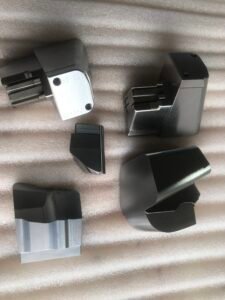
Designing molds with lifters or sliders requires careful attention to several factors to ensure proper function and longevity.
For lifter designs:
- The lifter angle must be carefully calculated – too steep and friction increases, too shallow and more ejection stroke is needed
- Wear surfaces should be hardened and properly lubricated
- Clearances must account for thermal expansion during operation
- The lifter must fully clear the undercut before part ejection completes
- Return mechanisms must ensure positive resetting of the lifter
For slider designs:
- Slider movement must be precisely guided to prevent binding
- Wear plates and gibs must be properly hardened and maintained
- Actuation systems must provide sufficient force for consistent operation
- Cooling channels must be routed around slider components
- Safety interlocks should prevent mold damage if sliders don’t fully retract
Both mechanisms require careful consideration of draft angles on the undercut surfaces to ensure smooth release. The material shrinkage characteristics must also be accounted for in the design to prevent excessive stress on the mechanisms during cooling.
Modern CAD systems and mold flow analysis tools can significantly help in optimizing lifter and slider designs before cutting steel. These tools can simulate the movements and identify potential interference or stress points.
8. Cost and Maintenance Factors
The economic considerations between lifters and sliders can significantly impact project budgets and long-term operating costs.
Lifters are generally less expensive to implement initially. They require fewer additional components and can often be incorporated into standard mold bases. The machining of lifter components is typically simpler than complex slider systems. For low to medium volume production or prototype molds, lifters often provide the most cost-effective solution.
Sliders add considerable cost to mold construction. They require additional machining, more complex assembly, and often additional components like hydraulic cylinders or precision guides. However, for high-volume production, this initial investment may be justified by improved reliability and faster cycle times.
Maintenance requirements also differ. Lifters generally need periodic lubrication and inspection of wear surfaces, but their simpler design means fewer failure points. Sliders require more comprehensive maintenance, including inspection of wear plates, gibs, actuators, and guiding systems.
Downtime costs should also be considered. While slider failures can be more complex to repair, their independent operation often means the entire mold doesn’t need to be disassembled. Lifter failures may require removing the ejector system, which can be more time-consuming.
For companies considering mold cost optimization strategies, understanding these cost trade-offs is essential for making informed decisions about which mechanism to use.
9. Common Challenges and Solutions
Both lifters and sliders present unique challenges in mold operation, but these can be mitigated with proper design and maintenance practices.
Common lifter challenges:
- Sticking or binding: Often caused by insufficient draft angles or poor surface finish. Solution: Increase draft, improve polishing, or add lubrication.
- Premature wear: Typically from excessive friction. Solution: Use hardened steels and proper clearances.
- Incomplete undercut release: Usually due to insufficient ejection stroke. Solution: Increase stroke or adjust lifter angle.
Common slider challenges:
- Timing issues: Sliders not fully retracting before mold close. Solution: Adjust timing or add sensors.
- Wear and play: Leading to flash or dimensional issues. Solution: Regular maintenance and replacement of wear components.
- Cooling limitations: Sliders can block optimal cooling channel placement. Solution: Innovative cooling designs or beryllium copper inserts.
For both mechanisms, proper venting is critical to prevent gas traps that could cause burns or incomplete filling. Venting should be incorporated into the design of both lifters and sliders.
Material selection for the mechanisms is also crucial. High-wear areas should use hardened tool steels or specialized coatings to extend service life. Regular preventive maintenance schedules can catch issues before they cause production problems.
10. Future Trends in Mold Mechanisms
The evolution of mold mechanisms continues as new technologies and materials emerge in the plastics industry.
One significant trend is the increasing use of advanced simulation tools to optimize lifter and slider designs before manufacturing. These tools can predict wear patterns, movement dynamics, and even thermal effects on the mechanisms.
Another development is the growing use of hybrid actuation systems. Some modern molds combine traditional angled pins with servo motors or pneumatic assists to create more flexible movement profiles. This can provide benefits of both lifters and sliders in certain applications.
Materials science is also impacting mold mechanisms. New tool steels and surface treatments are extending the life of wear components. Self-lubricating materials and coatings are reducing maintenance requirements for both lifters and sliders.
Industry 4.0 concepts are being applied to mold mechanisms as well. Sensors can now monitor lifter and slider positions, wear rates, and operating forces in real-time, enabling predictive maintenance and process optimization.
As additive manufacturing becomes more prevalent in mold making, we may see more complex internal geometries in both lifters and sliders, potentially combining cooling channels with movement mechanisms for improved performance.
Frequently Asked Questions
Q: Can lifters and sliders be used together in the same mold?
A: Absolutely. Many molds combine both mechanisms to handle different undercuts in the same part. For example, a mold might use sliders for large external undercuts and lifters for small internal features. The key is ensuring proper timing and space allocation for all movements.
Q: Which is more durable – lifters or sliders?
A: Both can be equally durable when properly designed and maintained. Lifters generally have fewer wear points but may experience more concentrated stress. Sliders have more components that can wear but often distribute forces over larger areas. Material selection and maintenance practices ultimately determine durability more than the mechanism type.
Q: How do I decide between a lifter and slider for my application?
A: Consider these factors: undercut size and location, production volume, available mold space, budget, and material characteristics. For small internal undercuts and cost-sensitive projects, lifters are often preferred. For large or complex undercuts and high-volume production, sliders usually work better. Consulting with an experienced mold designer is always recommended.
Q: Can lifters or sliders be added to an existing mold?
A: It’s possible but often challenging. Adding lifters may require modifying the ejector system and core. Adding sliders typically needs significant mold base modifications. Retrofitting is usually more expensive than incorporating these features in the original design. For major changes, building a new mold is often more cost-effective.
Q: Do lifters or sliders affect cycle time?
A: Both can impact cycle time but in different ways. Lifters operate during ejection, so they don’t typically add to cycle time directly. Sliders often need additional time to actuate before ejection can begin. However, well-designed mechanisms of either type minimize their impact on overall cycle time.
Conclusion
Understanding the differences between lifters and sliders is fundamental for effective mold design and plastic part production. While both mechanisms solve undercut challenges, they do so in distinct ways with different advantages and limitations.
Lifters offer simplicity and cost-effectiveness for small to medium internal undercuts, while sliders provide the versatility needed for complex geometries and high-volume production. The choice between them depends on your specific part requirements, production goals, and budget considerations.
As mold technology continues to advance, we’re seeing innovations that combine the benefits of both approaches. Regardless of the mechanism chosen, proper design, material selection, and maintenance are key to ensuring long-term mold performance and part quality.
For more insights into mold design, check out our related articles on injection molding fundamentals and advanced mold design techniques.